How It Works
OverviewShipping ProcessPricesPayment & BookingOpen vs EnclosedTransit TimesPrepare Your CarFAQFor Individuals
OverviewMoving & RelocationJust Bought a CarStudentsMilitary (PCS)Classic & Luxury CarsMotorcyclesOversized & Non-RunningGift or Family TransferFor Business
OverviewDealer ProgramAuction & Marketplace PickupFleet & Rental MovesRecurring LanesBulk QuoteBusiness AccountBusiness ToolsBusiness FAQBecome a CarrierHome / How It Works / Prices
Why shipping prices are different
Two shipments traveling the same distance can have very different costs. Here’s what carriers consider — and why every rate is calculated individually, not as one fixed price per mile.

Distance & route
Not just the number of miles
Size & weight
How much trailer space it uses
Open or enclosed
Equipment and capacity
Timing & season
Carrier availability on your route
On this page
Why shipping prices are different
A compact sedan and a full-size pickup may be heading to the same destination, but they do not occupy the same trailer space or place the same demands on the carrier.
The same applies to boats, recreational vehicles, household goods, and heavy equipment. Each shipment has its own dimensions, weight, loading requirements, and transportation considerations.
Understanding these differences helps explain why transportation rates are calculated individually rather than through one fixed price per mile.
Distance is only part of the equation
Distance is one of the first things considered when calculating a rate, but the number of miles alone does not determine the final price. Carriers also consider the route itself. Major transportation corridors generally have more carrier traffic and more opportunities to coordinate shipments — a route between two busy metro areas may be easier to service than one involving a remote pickup or a destination far from established trucking routes.
Long-distance shipments usually have a higher total cost, but their cost per mile is often lower than that of shorter shipments, because loading, dispatch, and coordination costs are incurred regardless of distance.
Example
Transporting a vehicle 300 miles is not necessarily one-third the price of transporting it 900 miles. The actual rate depends on the route, available equipment, and carrier demand.
Vehicle size, weight & dimensions
Every trailer has specific space and weight limits. The room a shipment occupies directly affects how much additional cargo a carrier can accommodate. A compact sedan takes less space than a full-size SUV, lifted pickup, or commercial truck — larger vehicles can reduce how many other vehicles fit on a multi-car transporter.
Dimensions are particularly important for boats, RVs, trailers, and heavy equipment. Even when two shipments weigh about the same, differences in length, width, or height may require completely different equipment.
Accurate measurements matter
Providing the manufacturer’s specifications or actual measurements helps avoid incorrect estimates and last-minute adjustments.
Open vs. enclosed transportation
The type of transportation selected has a direct impact on the price.
Open transport
The standard option for most vehicle shipments, on open multi-car trailers — widely available and generally more economical. Common for standard cars and sedans, SUVs and pickups, dealership and auction vehicles, and everyday relocations. Vehicles are exposed to normal outdoor conditions, including weather and road debris.
Enclosed transport
Covered trailers add protection from weather, road debris, and outside exposure. Often selected for luxury and exotic vehicles, classic and collectible cars, restored or specialty vehicles, and high-value automobiles. Enclosed carriers move fewer vehicles per trip with specialized equipment, so this option generally costs more.
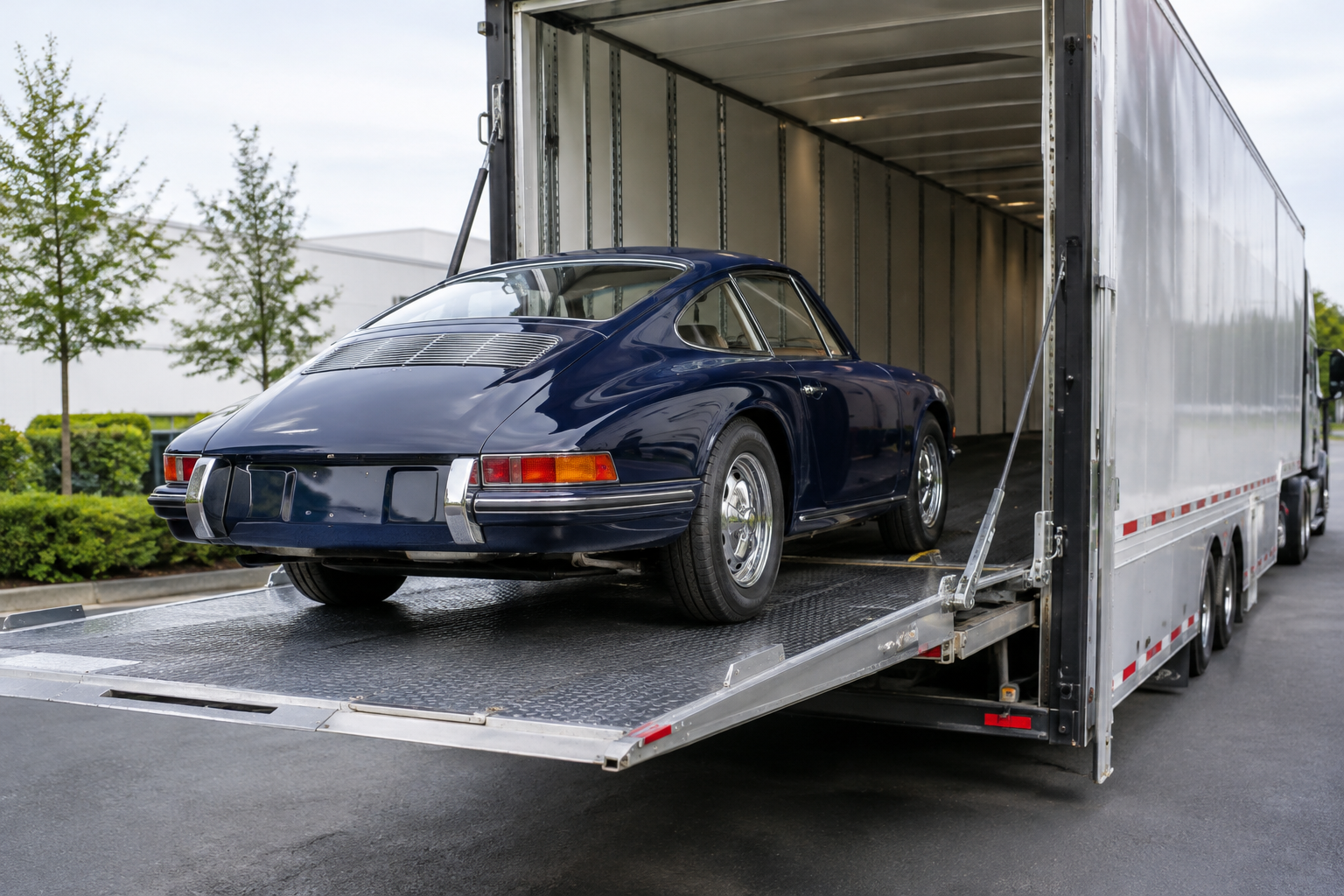
Enclosed carriers transport fewer vehicles per trip and use specialized loading equipment.
The right choice depends on the vehicle, the level of protection desired, and the available transportation options.
Vehicle condition & loading requirements
Whether a vehicle starts, runs, and drives is another important consideration. An operable vehicle that can be driven onto and off a transporter is generally easier to load. A non-running vehicle may require a carrier with a winch or other specialized loading equipment.
Not all inoperable vehicles are the same: a vehicle that starts but cannot move under its own power is different from one with damaged steering, locked wheels, missing tires, or significant mechanical issues. Carriers need to know:
Does the engine start?
Does the vehicle move under its own power?
Can it roll, steer, and brake?
Are all four tires present and inflated?
Is the vehicle accessible for loading?
Is winching or forklift assistance required?
These details determine which carriers and equipment are suitable. Additional loading requirements may increase the transportation cost.
Pickup & delivery locations
Major cities and transportation hubs generally offer more carrier options. Remote properties, rural communities, restricted-access locations, and destinations far from major highways may require additional driving time and mileage.
Accessibility is just as important as location. Large car haulers, flatbeds, and heavy equipment trailers cannot safely access every residential street or private driveway. In some situations the carrier may meet you at a nearby accessible location, such as a large parking area or commercial facility.
For residential freight deliveries, loading docks, elevators, stairs, narrow access roads, and unloading assistance may also affect the cost.
Pickup dates, scheduling & flexibility
When pickup dates are flexible, carriers have more opportunities to coordinate a shipment with other loads traveling in the same direction — which can create more competitive options.
Requesting immediate pickup, a specific collection date, or a narrow delivery window may leave fewer carrier options. Expedited transportation may require a dedicated vehicle or a different schedule, which can increase the overall cost.
Tip
If your schedule allows, provide a pickup window rather than one exact date. It helps with carrier availability.
Seasonal demand & carrier availability
Demand changes throughout the year. In summer, relocations, vehicle purchases, and seasonal travel add demand. In autumn many customers ship toward warmer southern states; in spring, demand often shifts the other way.
These changes affect how many carriers are available, how quickly a shipment can be assigned, and the rates carriers accept. Winter weather — snow, ice, and road closures — can also affect schedules on certain routes.
A transportation quote is based on current market conditions rather than a permanent nationwide rate.
Fuel prices & operating costs
Fuel is one of the major operating expenses in commercial trucking, and changes in diesel prices influence the rates carriers need to accept. But fuel is not the only expense. Carriers also account for:
Maintenance & repairs
Commercial insurance
Driver compensation
Equipment depreciation
Tolls & road expenses
Loading & unloading
Deadhead (empty) mileage
These operating expenses are reflected in the transportation rates offered by carriers.
Additional equipment, permits & special handling
Boats, oversized RVs, construction machinery, agricultural equipment, and commercial vehicles may require specialized trailers and additional planning, such as:
Flatbed trailers
Lowboy or step-deck trailers
RGN trailers
Specialized boat trailers
Winch-equipped carriers
Ramps, forklifts or cranes
Oversize & overweight permits
Escort or pilot vehicles
Oversized transportation depends on state and route regulations. Permitted dimensions, bridge restrictions, overhead clearance, and road access must be considered before a carrier can accept the shipment — the more specialized the planning, the more important accurate specifications become.
What affects the price of different shipments?
Many principles apply across the industry, but each shipment category has its own requirements.
Cars, SUVs & pickups
Distance, dimensions, operability, open or enclosed transport, and carrier availability. Modified or lifted trucks, oversized tires, and low clearance need extra consideration. Market value alone doesn’t set the price — dimensions and equipment do.
Motorcycles & ATVs
Size, weight, number of units, and loading requirements. Tell us whether it runs, whether it rolls, and whether parts or accessories need special handling. Enclosed transport may suit valuable bikes.
Boats & yachts
Length alone isn’t enough: beam (widest point), overall height, weight distribution, and trailer matter. Boats over legal width or height may need permits, route planning, and escorts.
RVs, campers & trailers
Towable RVs need a roadworthy trailer — tires, brakes, lights, axles, and hitch. Large RVs may exceed standard width or height limits and need specialized arrangements.
Household goods & freight
Priced by total weight, volume, dimensions, packaging, handling, and delivery conditions. Stairs, elevators, long carries, liftgates, and appointments can change the service required.
Heavy equipment & machinery
Weight and dimensions set the trailer type. Ground clearance, track width, and whether it moves under its own power matter. Over-limit loads need permits and approved routes.
Commercial & oversized vehicles
Trucks, buses, and work vehicles are assessed individually. Height, width, length, weight, condition, and clearance decide the equipment — permits and escorts can become major cost components.
Why can transportation quotes change?
An estimate is based on the information available when the request is submitted. The final arrangement depends on the actual shipment specifications and the carrier’s ability to accept the load — if the details change, the rate may need to change too.
For example, a customer requests transport for a standard sedan but later reports it is non-running. That changes the loading requirements and may require a different carrier. Incorrect dimensions, an undisclosed modification, a different pickup location, or additional cargo can have the same effect. Carrier availability also changes: a rate available today may not be available several days later.
At KA MegaTrans, we encourage complete and accurate shipment information from the beginning — so we can coordinate suitable options and minimize unexpected changes.
How to get the most accurate shipping quote
Provide the information a carrier needs to evaluate your shipment. Before requesting a quote, have these details ready:
Shipment
What to have ready
Vehicles
Year, make, model, condition, and preferred transport type
Boats & RVs
Overall dimensions, weight, trailer information, and loading requirements
Freight
Cargo description, total weight, dimensions, number of pallets, and loading arrangements
Heavy equipment
Specifications, operating condition, weight, dimensions, and available loading equipment
All shipments
Pickup and delivery ZIP codes and your preferred shipping timeframe
Photographs, manufacturer specifications, and additional measurements are especially helpful for oversized and specialized shipments. The more complete the information, the easier it is to identify suitable equipment and coordinate the right carrier.
Questions before you book?
Call (747) 269-4783 to talk with a coordinator, or request a free quote online. Your price arrives by email.