How It Works
OverviewShipping ProcessPricesPayment & BookingOpen vs EnclosedTransit TimesPrepare Your CarFAQFor Individuals
OverviewMoving & RelocationJust Bought a CarStudentsMilitary (PCS)Classic & Luxury CarsMotorcyclesOversized & Non-RunningGift or Family TransferFor Business
OverviewDealer ProgramAuction & Marketplace PickupFleet & Rental MovesRecurring LanesBulk QuoteBusiness AccountBusiness ToolsBusiness FAQBecome a CarrierHome / For Individuals / Oversized & Non-Running
Oversized & non-running vehicle transportation
Lifted pickups, cargo vans, box trucks, work vehicles, and cars that don’t start — matched with the right trailer, loading equipment, and carrier.
Oversized & commercial
Evaluated individually
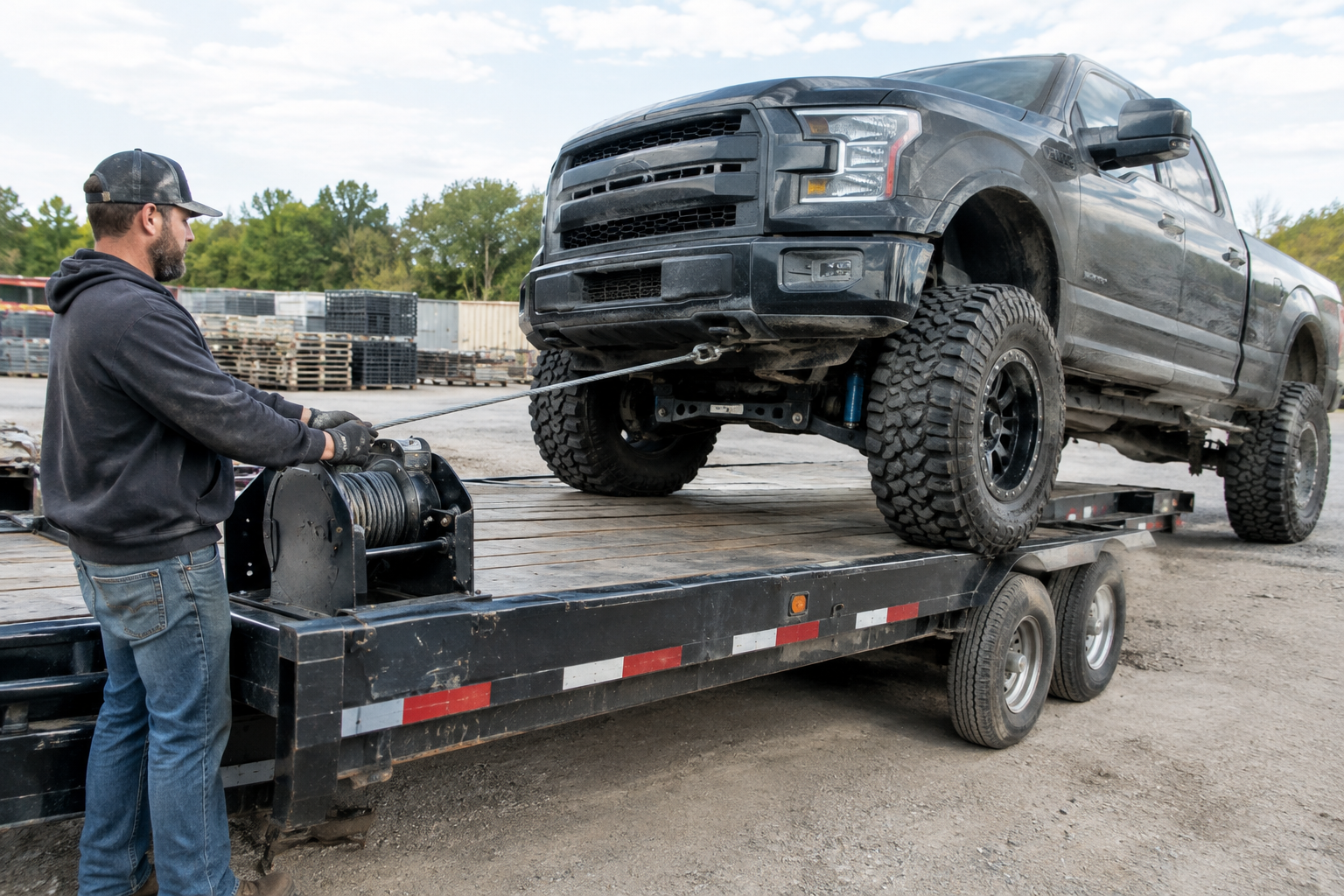
Winch-assisted loading
Rolls, steers, brakes
Forklift-assisted loading
When it can’t roll
Open or enclosed
Based on specifications
Not running? Here’s how it gets loaded
Whether the vehicle can roll, steer, and brake decides the loading method and equipment.
Does the vehicle roll, steer, and brake?
Yes
Winch-assisted loading
If the vehicle doesn’t start but its wheels roll, steering works, and brakes function, a winch can pull it onto the trailer — common for dead batteries and engine problems.
Subject to the carrier’s equipment and assessment.
No
Forklift-assisted loading
Damaged wheels, locked steering, or non-functional brakes mean a standard winch isn’t safe. Forklift-assisted loading or another specialized solution may be needed.
Contact us before booking so we can evaluate it.
On this page
More than a standard auto transport
Larger dimensions, extra weight, limited ground clearance, and mechanical problems all affect the trailer, loading equipment, and carrier a shipment needs.
Whether it’s a lifted pickup, a commercial cargo van, a box truck, a work vehicle, or a car that no longer starts, the equipment must match the vehicle’s actual dimensions, weight, operating condition, and loading requirements.
Specialized carriers nationwide
KA MegaTrans works with licensed and insured carriers operating suitable trailers, specialized equipment, and loading solutions for oversized and inoperable vehicles.
Oversized vehicles: trucks, vans, and commercial vehicles
Larger vehicles may exceed conventional trailer height, width, length, or weight limits and need a carrier with specialized equipment. We coordinate transport for:
Lifted & modified pickups
Dually & heavy-duty pickups
Cargo & work vans
Box & delivery trucks
Utility & service trucks
Oversized SUVs
Other specialty vehicles
Each shipment is evaluated individually — a model name alone doesn’t decide the trailer. A lifted pickup with oversized tires, aftermarket bumpers, and a roof rack has very different requirements from the same model in factory form, and a van with extra equipment may exceed a conventional trailer’s clearance or weight capacity.
Specialized trailers and equipment for oversized loads
Depending on specifications, options may include specialized open trailers, flatbeds, lowboys, or other suitable equipment. The trailer is chosen based on:
Overall dimensions
Total length, width, and height — including mirrors, lift kits, tires, racks, and accessories.
Actual vehicle weight
Must stay within the trailer’s rated capacity and transportation limits.
Ground clearance
Lifted and lowered vehicles need loading arrangements that avoid underbody contact.
Carrier & route requirements
Trailer availability, weight and bridge limits, road access, and permits.
Accurate specifications help identify the right carrier and avoid equipment mismatches or pickup complications.
Non-running vehicles: understanding the loading requirements
A vehicle that doesn’t start isn’t impossible to transport — but whether it can roll, steer, and brake decides the method. Simply describing it as “non-running” doesn’t give carriers enough information.
Winch-assisted loading works when the vehicle rolls, steers, and brakes.
If it can’t roll, steer, or brake
Contact KA MegaTrans before booking. Forklift availability, vehicle weight, loading access, and condition must be evaluated — not every pickup location has suitable equipment.
Open vs. enclosed for oversized and inoperable vehicles
Open transport is common for oversized trucks, commercial vans, and standard non-running vehicles when a suitable carrier is available — specialized open equipment provides capacity conventional multi-car trailers can’t.
Enclosed transport may suit some high-value, specialty, or modified vehicles when dimensions and weight are compatible, but enclosed trailers have more restrictive clearance and loading limits. For oversized vehicles it isn’t always practical. KA MegaTrans can coordinate both, depending on your vehicle and available equipment.
Pickup location and loading access
A carrier may have the right equipment but still can’t complete pickup without enough space. Narrow streets, low trees, steep driveways, limited turning areas, overhead obstructions, and commercial-vehicle restrictions all create difficulties.
Forklift loading also needs space to position equipment safely. If the vehicle is at a repair shop, dealership, auction, storage yard, or residence, identify loading restrictions before scheduling — we may recommend an alternative pickup location with better access.
What information is needed for an oversized or non-running quote?
Vehicle details
Year, make, model, and vehicle type
Dimensions
Overall length, width, and height — including modifications
Weight
Actual or approximate vehicle weight
Operating condition
Whether it starts, rolls, steers, and brakes normally
Loading requirements
Winching, forklift assistance, or other equipment
Modifications
Lift kits, oversized tires, dually setup, bumpers, racks
Locations
Exact addresses and any access restrictions
Scheduling
Ready date and preferred pickup and delivery windows
Photos and videos help
For non-running vehicles, images showing the condition clarify loading requirements — especially locked wheels, damaged suspension, or steering problems.
Why specialized transportation requires advance planning
Oversized and inoperable shipments rely on a smaller pool of qualified carriers with the right trailer capacity, loading equipment, and experience. Availability also depends on route, distance, equipment positioning, permits, and pickup location — and forklift loading needs extra coordination at the origin.
Discuss and evaluate these shipments before confirming a pickup date. Early communication gives time to find suitable equipment, verify loading, and set a realistic schedule.
Questions before you book?
Call (747) 269-4783 to talk with a coordinator, or request a free quote online. Your price arrives by email.